

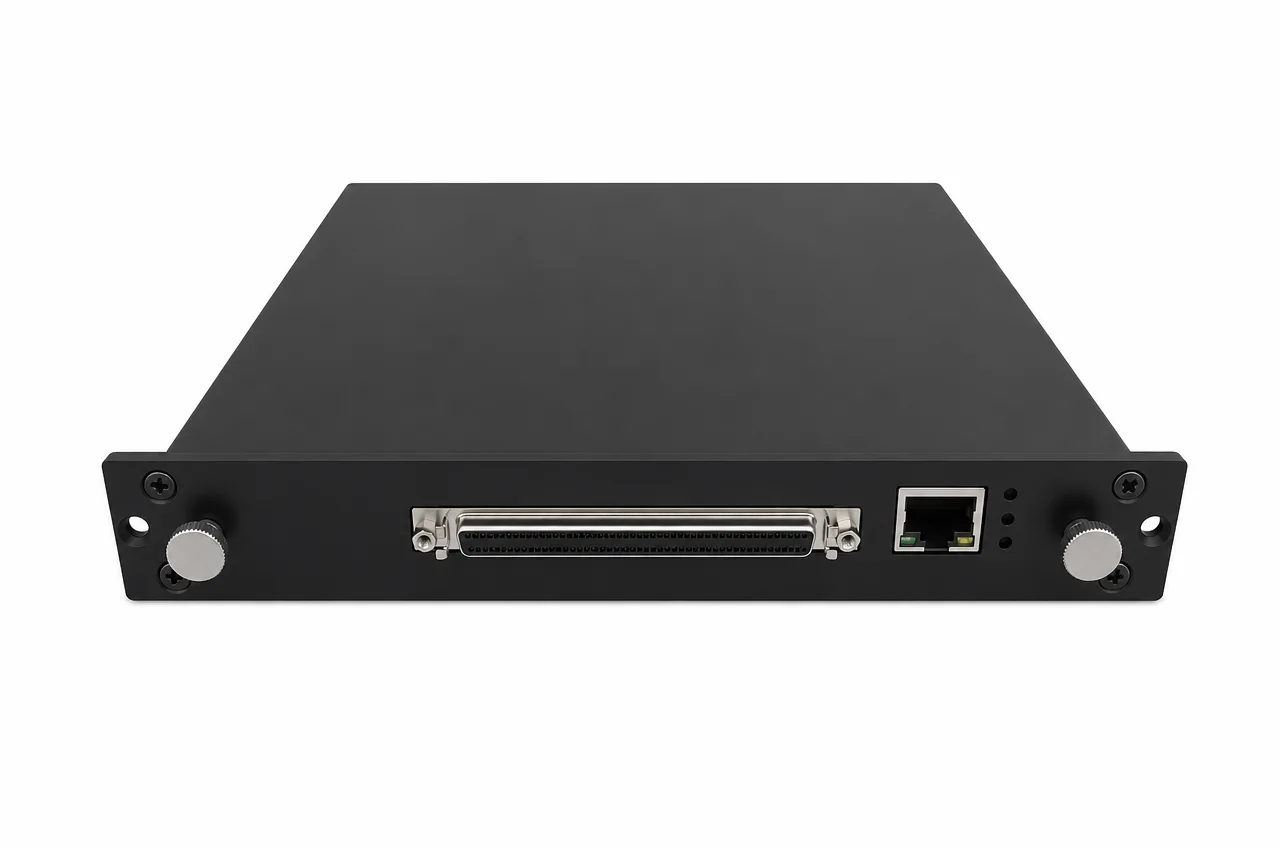
DA Analog Output Module
- 16 single-ended / 8 differential channels, switchable between the two
- ≥100 kS/s per channel with all channels synchronous, 16-bit, ±10V, accuracy better than ±0.5%FS
- Fixed waveforms — sine, square and triangle — generated on the module itself
- Arbitrary waveform output, with sample data pushed down by the zero-slot module
- Single-cycle and continuous multi-cycle output, with calibration built in
- All parameters saved automatically and reloaded at power-on; built on 100% domestic chips
Need selection advice or an on-site demo? Use the buttons above and our engineers will reach out shortly.
Specifications
| Item | Value | Note |
|---|---|---|
| Analog Output (AO) | ||
| Channel Configuration | 16 single-ended / 8 differential | Single-ended and differential switchable |
| Output Rate | ≥100 kS/s per channel, all synchronous | |
| DA Resolution | 16bit | |
| Output Range | -10V ~ +10V | |
| Accuracy | Better than ±0.5%FS | |
| Waveform Output & Data Handling | ||
| Fixed Waveforms | Sine, square, triangle | |
| Arbitrary Waveform | Supported, with sample data pushed down by the zero-slot module | |
| Output Mode | Single-cycle / continuous multi-cycle | |
| Calibration | Supported | |
| Parameter Persistence | Saved automatically, reloaded at power-on | |
| Platform Common Characteristics | ||
| Mounting | Front-inserted card, quickly swappable | |
| Standalone Use | Detachable from the chassis for standalone use over gigabit Ethernet | |
| Backplane Communication | Power, command, synchronization and status signals unified over the backplane | |
| Localization Rate | 100% | |
| Component Temperature Grade | -40℃ ~ 85℃ wide temperature | |
FAQ
- Beyond sine, square and triangle, can it output a custom waveform?
- Yes. Alongside the three fixed waveforms the module generates itself, it supports arbitrary waveform output: sample data is pushed from the zero-slot module (host) down to the DA module, which then plays it at the configured rate as a single cycle or as continuous multi-cycle output — useful for replaying recorded signals or building non-standard stimulus.